How Neurographica Turns Stress Into Art and Insight
Written By: J. J. Madsen
Stress often shows up as tension we can’t quite name—racing thoughts, tangled emotions, or a sense of inner clutter that refuses to settle. What makes Neurographica remarkable isn’t simply that it involves drawing, but that it gives stress a place to go. Instead of being trapped in the mind, stress becomes something visible, malleable, and ultimately meaningful.
When someone begins a Neurographica session, they’re not just creating lines on a page; they’re giving shape to the internal noise that usually has nowhere to land. Stress, by nature, is chaotic. It builds from conflicting responsibilities, emotional pressure, and the constant mental looping that comes from trying to solve problems logically. Neurographica interrupts that loop. It invites the mind to shift from verbal processing into symbolic expression—an entirely different channel where tension can be released rather than rehearsed.
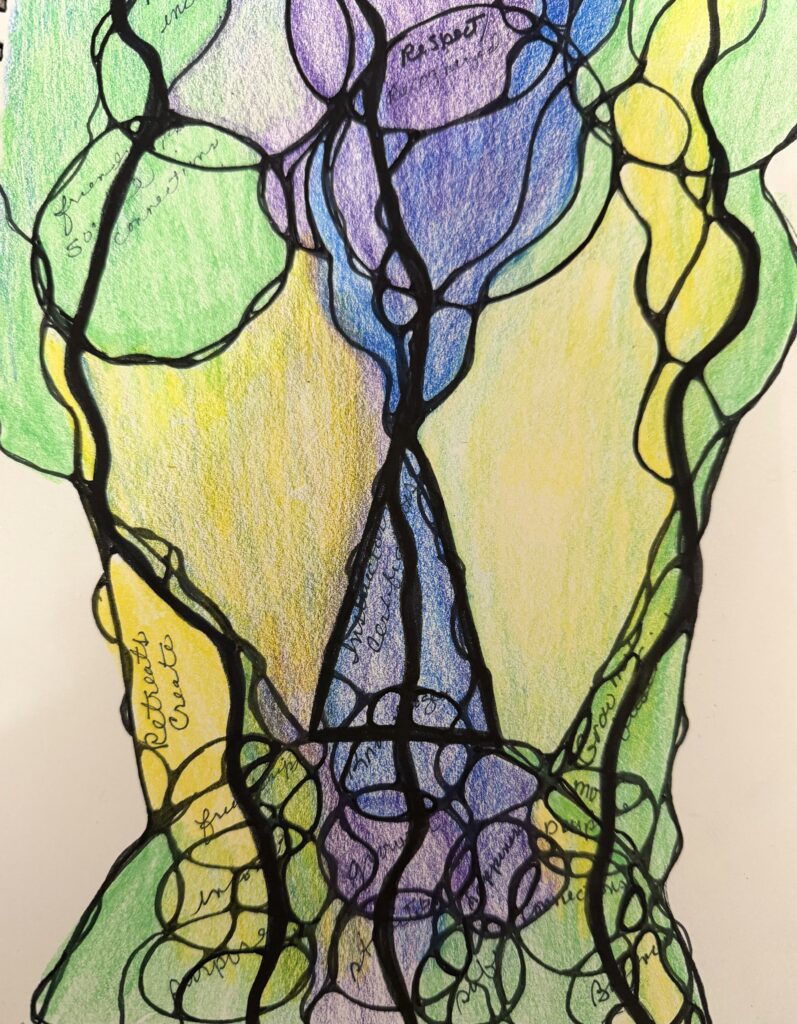
As the drawing evolves, so does the relationship to the stress behind it. What initially appears as a cluster of erratic lines often mirrors the disordered feeling within. But as the artwork grows, the visual chaos begins to organize itself. Patterns emerge. Contrasts soften. Spaces that once felt cluttered become integrated into a fuller, more coherent image. The mind, seeing its inner world laid out in front of it, naturally follows suit.
This transformation is more than aesthetic. Neurographica quietly encourages emotional reframing. Stress that once felt overwhelming becomes something the creator can interact with—something that changes with each stroke, each connection, each added layer of color. The artwork becomes a kind of conversation with oneself, where confusion turns into clarity and pressure turns into perspective.
What’s especially powerful is that the final drawing often reveals insights the person didn’t expect. Colors chosen on impulse reveal emotional undercurrents. Shapes that emerge spontaneously hint at needs, boundaries, or inner strengths that may have been overlooked. The finished piece becomes a snapshot of emotional evolution—a before-and-after of the inner landscape, captured on paper.
In this way, Neurographica doesn’t just turn stress into art; it turns it into understanding. It transforms the intangible into the tangible, the overwhelming into the expressive, the chaotic into the meaningful. And in doing so, it offers a gentle reminder: even our most tangled moments can become sources of beauty, reflection, and growth when we give them room to unfold.